The Quiet After the Storm
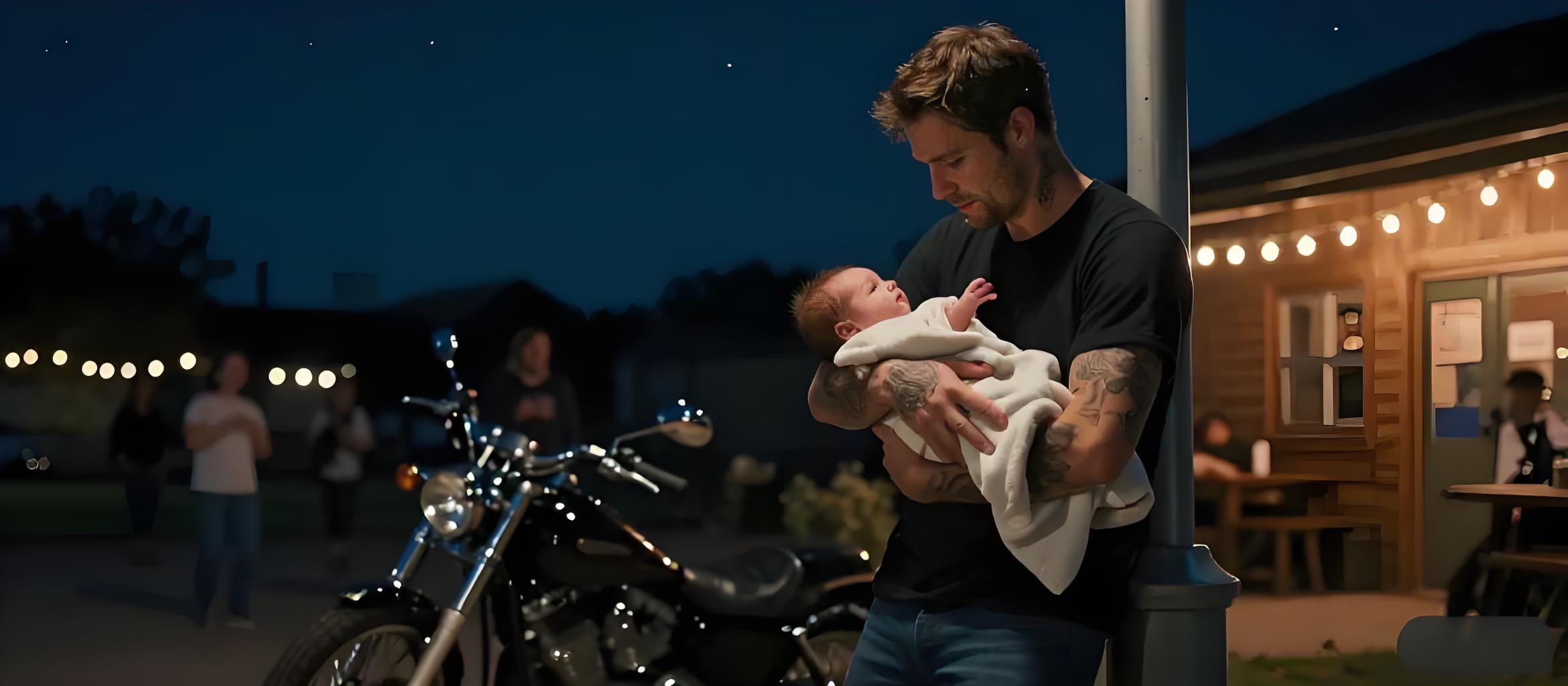
The final scene of Wrapped in Chains is not a grand reunion or a passionate declaration. It is a quiet moment, late at night, outside a clubhouse where music plays and people laugh and life continues. Chains stands in the dark, holding his newborn daughter, Georgia, against his chest.
He looked down at his daughter. His thumb moved slowly, carefully, across her cheek. She was small. Fragile. And deeply, terrifyingly important.
This is the culmination of his entire character arc. The man who began the novel as a possessive, controlling force—someone who equated love with ownership—has become a father. And fatherhood, he is discovering, is not about control. It is about stewardship. About protection without cages.
The Conversation He Had with Bridgette
Earlier in the novel, Chains had a conversation with Bridgette that planted the seeds for this moment. She told him:
“You don’t raise a daughter by controlling the world around her. You teach her that she is not someone who needs to be controlled. And you show her what safety looks like without cages.”
These words have been living inside him. He is not sure how to implement them yet. He does not know how to be a father in a world he cannot control. But he is trying. And that effort is visible in the way he holds his daughter—not possessively, but carefully. Not claiming, but protecting.
Speaking to Her in the Dark
Chains does something in this scene that he has rarely done throughout the novel: he speaks vulnerably, without an audience, without performance.
“Your mom is strong,” he said. His voice was barely above a whisper. “You should know that early on.”
“She’s stubborn too.”
He is not talking to Georgia. Not really. He is talking to himself, processing the enormity of what has happened. He is acknowledging Breanna’s strength—a strength that has sometimes terrified him, sometimes frustrated him, but always commanded his respect.
Then he makes a promise:
“I’m going to try to make sure you don’t grow up shadowed by this life I live.”
This is significant. Chains has never expressed shame about his life before. He is a Hell’s Reaper. He is proud of it. But for his daughter, he wants something different. He does not know how to give it to her yet. But he wants to try.
The Fear That Will Never Leave
Chains admits, in this quiet moment, the fear that will define his fatherhood:
“If some boy tries to talk to you the way I used to talk to your mom, I am going to have a problem.”
It is a line that could be played for humour, and there is a touch of that—the image of Chains intimidating teenage boys is genuinely funny. But underneath the humour is a real anxiety. He knows what young men are capable of. He was one. And the thought of his daughter encountering someone like his younger self is terrifying.
This is the irony of his character. He has spent years being the danger. Now he must reckon with what it means to protect someone from that danger.
The Shift from Owning to Standing Beside
The final lines of the novel are a meditation on what love has become for Chains:
Because love, he was learning, was not something you held. It was something you stood beside.
And sometimes—if you were lucky—it stood beside you too.
This is the thesis of the entire novel. Love is not possession. It is not ownership. It is not control. It is presence. It is choosing to stand beside someone, day after day, even when it is hard. Even when you are scared. Even when you do not know if you are doing it right.
Chains has learned this lesson slowly, painfully, through fights and separations and moments of painful honesty. He is not a different man than he was at the beginning. But he is a better one. And that is enough.
Breanna Laughing Inside
Throughout this final scene, Breanna is inside the clubhouse, laughing with friends, wearing a pretty dress, her hair down. She looks younger. Happier. She is not watching Chains. She is not hovering. She is living her own life, secure in the knowledge that he is there—not as a warden, but as a partner.
The sound reached Chains across the room and something inside his chest loosened.
Her happiness is his happiness now. Not because he controls it, but because he loves her. And that distinction—between because and so that—is everything.
Personal Reflection
Endings are difficult. They can feel rushed or unearned. But the ending of Wrapped in Chains feels exactly right. It is quiet. It is domestic. It is a man holding his daughter in the dark, making promises he is not sure he can keep, trying to be better than he was.
As a female reader, this is the ending I want. Not a fairy-tale resolution where all problems are solved, but a real-world resolution where the characters are still flawed, still learning, still trying. Chains will never be a gentle man. He will always have violence in him. But he has learned to direct it away from the people he loves. He has learned that protection is not the same as imprisonment.
And Breanna, laughing inside the clubhouse, is free. Not because he let her go, but because she chose to stay. And that choice, freely made, is the only happy ending that matters.