The Weight of a Single Touch
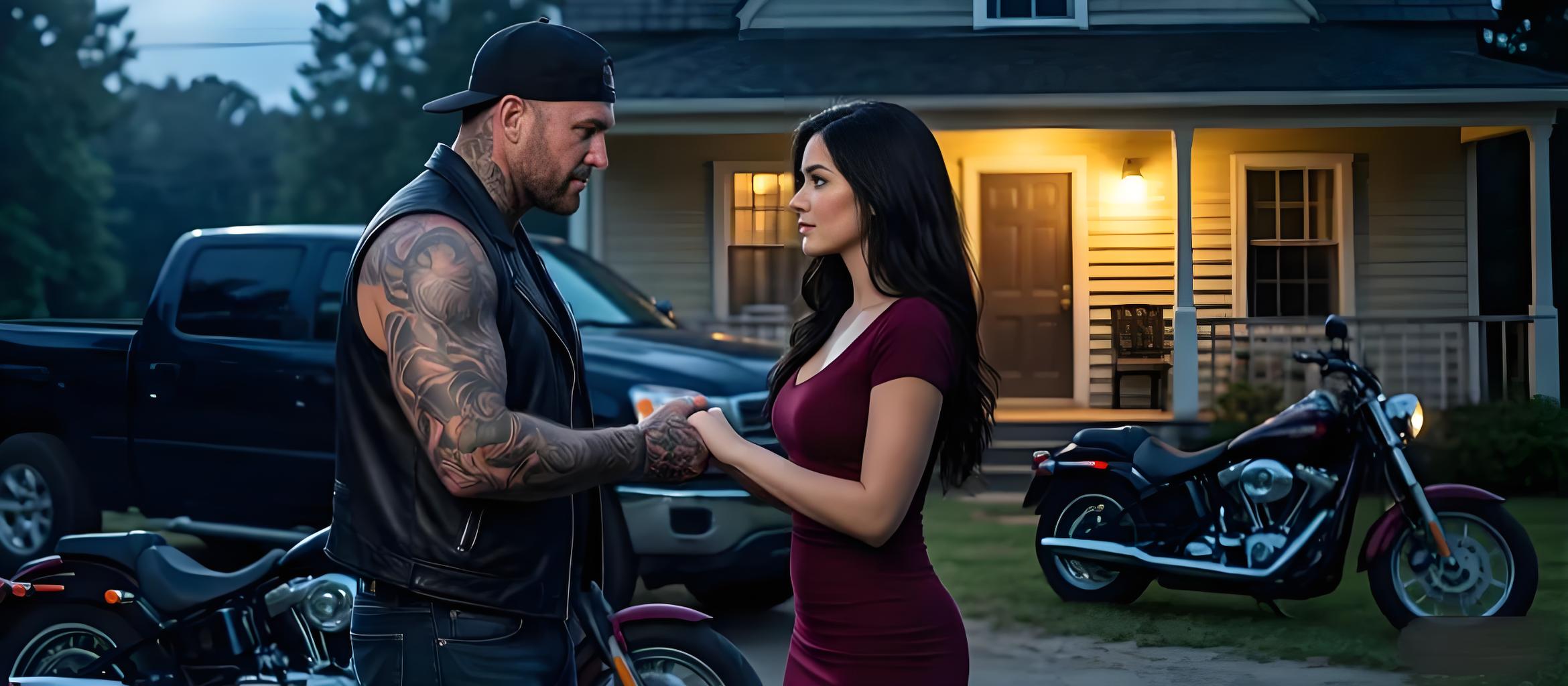
There is something profoundly electric about a first touch in fiction. It is the moment when possibility transforms into chemistry, when the abstract becomes physical. In Wrapped in Chains, the author crafts this moment with surgical precision. Breanna Drake, fresh from New York and still raw from the loss of her parents, walks into a world she does not understand—a barndominium filled with men in leather cuts, the smell of whiskey and something darker. And then she sees him.
Chains. Vice president of the Hell’s Reapers. Tall, broad, ink crawling down his arms. He looks at her, and the world narrows.
His eyes landed on her. And widened—just slightly. His gaze dragged down her body. Slowly. Deliberately.
The description is not gratuitous. It is purposeful. Chains is not a man who hides what he wants, and from the first glance, he wants her. But what makes this moment truly remarkable is what follows: the handshake.
The Handshake That Broke Something Open
He stepped forward and extended his hand. “Nice to meet ya, darlin’.” The second their hands touched, something snapped. Sharp. Electric.
The author does not rely on overwrought metaphors. There is no mention of fireworks or lightning strikes. Instead, the language is almost clinical: something snapped. Sharp. Electric. This restraint is what makes the moment land. It feels real because real attraction often defies elaborate description. It is a jolt, a recognition, a silent agreement between two bodies that something has shifted.
As a female reader, this moment resonates because it captures the paradox of first attraction: it is both thrilling and terrifying. Breanna does not know this man. She has every reason to be cautious. Yet her body responds before her mind can catch up. That is not weakness; it is honesty. The author allows her heroine to be vulnerable without being passive.
The Power of Being Seen
What lingers after this scene is not the physical description but the way Chains looks at her. He does not leer. He assesses. There is a difference. A leer is performative, meant to make the woman feel small. An assessment is personal—it says, I see you, and I am interested in what I see.
Breanna, for her part, does not shrink. She lifts her chin. She meets his gaze. She has walked into rooms filled with billionaires and senators, the narrative reminds us. She can handle a biker. This is crucial. The author is establishing early that Breanna is not a damsel in distress. She is a woman who chooses to engage, not one who is swept away against her will.
Why This Scene Works for Women Readers
As women, we are conditioned to be wary of male attention. We learn to read intent, to distinguish between genuine interest and predatory behaviour. Chains walks a fine line in this scene. He is intense, yes. He is forward. But he is not threatening. He does not crowd her. He does not touch her without permission. The handshake is a socially acceptable form of contact, and yet the author transforms it into something electric precisely because it is allowed.
This is the fantasy element of the romance genre: the idea that a man can be overwhelmingly attracted to you and still respect your boundaries. That he can want you and wait. That his desire does not cancel out your agency.
The Aftermath of the First Touch
The scene does not end with the handshake. Breanna pulls back first. That detail matters. She is the one who breaks the contact, who steps away. She is not trapped by the moment. Later, when he gives her his number “in case Bridgette gets stupid drunk,” both of them know it is an excuse. He wants her to call. She takes the number. The game has begun.
But the foundation has been laid: mutual attraction, mutual awareness, and a quiet understanding that something has started that neither of them is ready to name.
Personal Reflection
Reading this scene for the first time, I found myself holding my breath. Not because I was worried about what would happen next, but because I recognised the feeling. That moment when you meet someone and your body knows before your brain does. When the air changes. When a handshake becomes something you remember days later.
The author captures that elusive quality without over-explaining it. And that, I think, is the mark of skilled romance writing: trusting the reader to feel what the characters feel, without having to spell it out in neon letters.